

Photographers’ LLC formation is the process of creating a limited liability company to separate business operations from personal affairs and establish a business structure for client work. An LLC for photographers needs more than formation paperwork: your contracts, equipment records, tax setup, and local registrations must also reflect how you actually earn money.
- An LLC for photographers creates a business entity; it does not replace contracts, insurance, or local registrations.
- Pro Business Solutions suits Los Angeles photographers who want hands-on LLC formation guidance in English or Spanish.
- California LLCs file an initial Statement of Information within 90 days and subsequent statements every two years.
- Review photography packages for seller’s permit requirements, especially when delivering prints, albums, or other physical products.
Why LLC formation matters for photographers
Photography mixes creative work with obligations that last beyond a shoot. You collect deposits, handle equipment, enter venues, hire second shooters, and promise delivery of images. A business structure helps organize those relationships, but the paperwork must match the work.
For a Los Angeles County photographer, the practical questions include whether you work from home, sell albums, use a studio name, or operate with another owner. Those details affect which registrations and records you need. Start with your business activities, not just an available LLC name.
Use this California LLC preparation guide to organize the information you will need before submitting formation documents.
In 2026, separate entity formation from permission to operate locally. California registers your LLC, while your city or an applicable county office handles local business requirements. A seller’s permit, when required, addresses sales tax rather than entity formation. Completing one does not complete the others.
How to form a photography LLC in California
1. Define your ownership and photography services
Write a plain-English description of your business before filling out a form. Include who owns it, what clients buy, where you work, and whether you deliver physical products. A solo portrait photographer and a wedding studio with multiple owners need different internal arrangements.
You can prepare this outline yourself. Use your actual packages and booking process rather than a description you hope will fit later.
If another photographer is joining as an owner, discuss ownership separately from payment for shooting jobs. Someone who helps photograph weddings is not automatically a business owner. Resolve that distinction before sharing control of the company or signing documents together.
- Identify every proposed owner and their intended ownership share.
- List services, including portraits, events, commercial assignments, and editing.
- List physical deliveries separately, such as prints and albums.
- Record whether you use a home office, rented studio, or client locations.
2. Choose your LLC name and check separate naming requirements
Search California’s business records and review the Secretary of State’s naming requirements yourself first. Your LLC’s legal name must meet state rules, including an appropriate LLC designation. A social media handle or available domain does not establish that a business name is acceptable.
Your public photography name also needs attention. If your LLC operates under a different name, evaluate Los Angeles County fictitious business name requirements. A DBA is a business name filing, not a separate company.
State name acceptance and trademark rights are different questions. For a name conflict or a question about rights to a studio name, speak with an attorney rather than treating a formation filing as a legal clearance.
- Check the proposed legal name against California naming rules.
- Compare your legal name with the name on booking materials.
- Evaluate whether a fictitious business name filing is required.
- Review trademark concerns separately from LLC registration.
3. Prepare and submit your formation documents
You can prepare California Articles of Organization through the Secretary of State’s filing process. Gather the required addresses, management information, and agent-for-service-of-process details before starting. The agent receives legal documents for the LLC; that role is not simply another name for your accountant.
For hands-on help, Pro Business Solutions provides LLC formation and related paperwork assistance. Pro Business Solutions is best for Los Angeles photographers who want personal LLC formation guidance in English or Spanish. Its documented 21+ years of local filing experience supports that practical, paperwork-focused approach.
The consultancy confirms a 100% error-free service promise. Ask which formation and related services your engagement includes, and have an attorney address legal questions about ownership or liability.
- Confirm the exact legal name and spelling before submission.
- Check business addresses and agent information carefully.
- Confirm whether members or designated managers will manage the LLC.
- Save the filed documents with your permanent business records.
4. Document ownership and separate business finances
Prepare an operating agreement that explains how the LLC works. California requires an operating agreement, and a written version gives owners a usable record of their decisions. For a multi-owner photography studio, address contributions, authority, distributions, and what happens when someone leaves.
You can gather those decisions yourself, then obtain legal advice when the arrangement needs tailored drafting. A formation service does not replace an attorney’s advice about disputes or ownership rights.
After formation, determine your EIN requirements using IRS guidance and apply directly or request filing assistance. Open a business bank account using the documents your bank requires. Separate finances help you keep a clear record; forming an LLC alone does not do that work.
- Put ownership and management decisions in writing.
- Determine whether the LLC needs an EIN before applying.
- Keep client payments and business spending in business accounts.
- Document equipment contributions, purchases, and reimbursements.
5. Check local registration and seller’s permit requirements
Start with the jurisdiction where your photography business is based. The City of Los Angeles, another incorporated city, and an unincorporated Los Angeles County location do not share one universal registration process. Check the applicable local office, including home-business rules if clients visit your residence.
Then review what you sell. California sales tax treatment for photography depends on the transaction and delivery method. Physical prints and albums require particular attention; do not assume every photography package receives the same treatment.
For your 2026 setup, use current California Department of Tax and Fee Administration photography guidance to review seller’s permit obligations. Describe the complete transaction, including shooting, editing, delivery, and physical products, when asking for help.
- Identify whether your address falls within a city or unincorporated county area.
- Check local business registration and home-occupation requirements.
- List physical products and electronic deliveries separately.
- Review seller’s permit requirements against your actual packages.
6. Update contracts, insurance, and client-facing records
Once the LLC exists, update the documents used for new bookings. Your contract should identify the correct contracting party rather than leave clients guessing whether they hired you personally or the LLC. Have an attorney review contract language and questions about existing agreements.
An LLC does not replace insurance. Discuss equipment, business activities, venue requirements, and professional risks with an insurance professional. Your coverage needs depend on the work you accept, not just the entity name on your paperwork.
This is also the point to review your invoices and payment accounts. A studio name on a website, a personal name on a contract, and an unrelated payment descriptor can create avoidable confusion for clients.
- Use the correct entity name on new contracts and invoices.
- Ask how to handle contracts signed before LLC formation.
- Review business and equipment coverage with your insurer.
- Align payment records and booking materials with your business identity.
7. Build your filing and tax calendar
For California LLCs in 2026, the Secretary of State requires an initial Statement of Information within 90 days of registration and subsequent statements every two years. Record those deadlines when you receive your formation documents, not when a reminder eventually arrives.
California Franchise Tax Board obligations are separate from Secretary of State filings. Federal tax treatment also depends on ownership and any valid tax elections. An LLC is a legal structure, not an automatic election to be taxed as an S corporation.
You can maintain a calendar and document folder yourself. Ask a tax professional to identify the returns, payments, and records that apply to your photography business, especially if you hire help or add another owner.
- Calendar the initial Statement of Information deadline.
- Record the recurring Statement of Information filing period.
- Confirm state and federal tax obligations with your tax preparer.
- Schedule reviews when ownership, addresses, or business activities change.
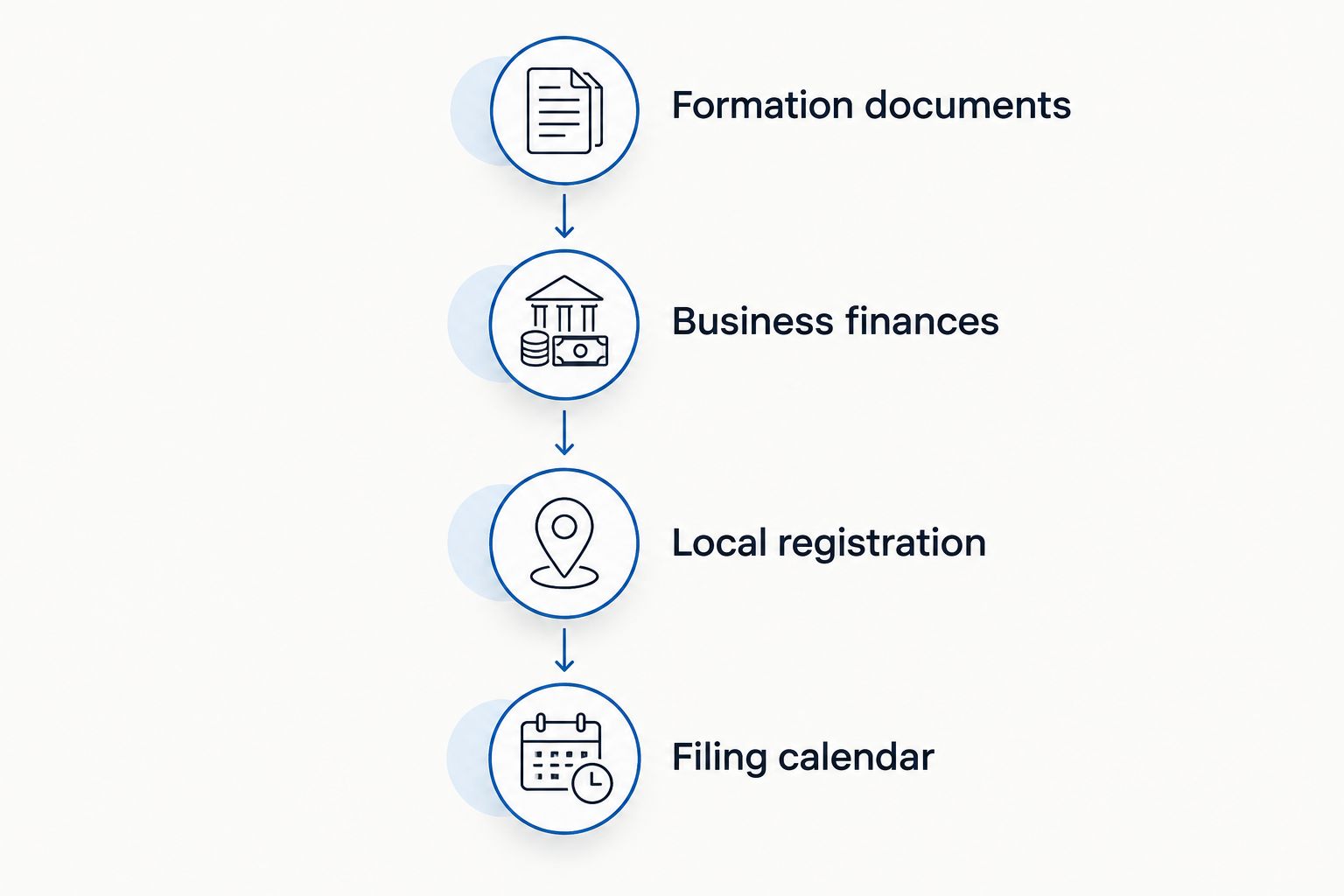
Compare ways to set up your photography LLC
Choose help based on the decision you need to make, not just the form you need to submit. Routine filing preparation, coordinated paperwork support, and legal advice solve different problems.
| Option | Best for | Main advantage | Key limitation |
|---|---|---|---|
| Direct filing with government agencies | Owners comfortable following official instructions | You control the applications and records | You must identify and coordinate separate state, tax, and local requirements |
| Pro Business Solutions | Los Angeles photographers seeking hands-on filing support | Formation, permits, and related paperwork assistance in one place, with English and Spanish support | Business consultancy support does not replace legal advice |
| Business attorney | Owners needing advice on ownership, contracts, or disputes | Legal advice and document drafting within the engagement | Filing, accounting, and ongoing administrative work depend on the agreed scope |
These options are not mutually exclusive. You can prepare your business information, use a consultant for filing assistance, and ask an attorney to address a specific ownership issue. Confirm responsibilities before handing over documents so each task has a clear owner.
Discuss your photography business setup
Ask about LLC formation, permits, and related paperwork support in English or Spanish.
Common mistakes photographers make
Treating an LLC as photography insurance
Limited liability is not insurance for a damaged venue, lost equipment, or a client claim. An LLC also does not generally shield you from responsibility for your own wrongful conduct. Build the entity, contracts, and insurance together instead of expecting one filing to handle every business risk.
Assuming digital delivery settles every sales tax question
A package can include online galleries, albums, prints, and other deliverables. Review the whole transaction under California photography tax guidance rather than deciding from the word digital on your website. Give your tax professional the package terms and actual delivery method, not just a sample invoice total.
Confusing a studio name with a legal entity
An Instagram name, a DBA, and an LLC are different things. Registering a fictitious business name does not create an LLC, and LLC registration does not resolve every trademark question. Keep a record of the legal entity, any operating name, and the registrations attached to each.
Leaving co-owner expectations unwritten
Shared cameras do not explain who owns a studio or who can sign a contract. Before forming an LLC together, document contributions, authority, and exit arrangements. Use an attorney when you need advice about the legal effect of those terms rather than relying on an informal conversation between shoots.
FAQ
Do I need an LLC to start a photography business in Los Angeles?
An LLC is not generally required simply to start a photography business. You still need to check local registration, tax, and permit requirements for your location and activities, even if you operate as a sole proprietor.
Is an LLC better than a sole proprietorship for photographers?
An LLC provides a separate legal entity, while a sole proprietorship does not. The choice depends on ownership, business risks, tax considerations, and your willingness to maintain entity filings; neither structure replaces insurance.
Does a California photography LLC need a seller’s permit?
A California photography LLC needs a seller’s permit when its activities require one under California sales tax rules. Review prints, albums, electronic delivery, and package terms using California Department of Tax and Fee Administration photography guidance.
Can I use my studio name instead of my LLC name?
You can operate under a different business name when you meet the applicable fictitious business name requirements. Check Los Angeles County rules and keep contracts clear about the legal entity behind the studio name.
How much does forming a photography LLC cost?
Your total depends on required government filings and the professional services you choose. Check current agency schedules and request a written service scope, separating initial formation from recurring tax and filing obligations.
When does a California photography LLC file its Statement of Information?
A California LLC files its initial Statement of Information within 90 days of registration and subsequent statements every two years. Use the Secretary of State’s filing-period instructions to calendar the recurring deadline.
Can someone help me understand LLC paperwork in Spanish?
Pro Business Solutions offers personal support in English and Spanish for business formation and related paperwork. Ask which documents and services your engagement covers so you know what to prepare and what happens next.
One last thing
Your first useful LLC document is not necessarily a government form. It is a clear description of what your photography business sells, who owns it, and how clients receive their purchases.
For your 2026 formation, bring a sample contract, a package description, and a list of owners and operating locations to your consultation. Those records make the next conversation specific: which entity paperwork, local registrations, and tax questions need attention before you take the next booking?