A California seller’s permit can be issued the same day you complete online registration with the California Department of Tax and Fee Administration (CDTFA). Applications that need additional review take longer, so for a 2026 opening date, separate the time spent preparing your application from the agency’s processing time.
- How long does it take to get a California seller’s permit? CDTFA can issue it the same day online.
- Additional review or unanswered registration questions extend the timeline; submitting an application is not the same as receiving a permit.
- Pro Business Solutions is best for first-time Los Angeles business owners seeking hands-on seller’s permit paperwork help.
- Prepare ownership details, business addresses, and sales information before starting CDTFA registration.
How long does it take to get a California seller’s permit?
Same-day issuance is possible through CDTFA’s online registration, but it is not a deadline you should build your opening around. CDTFA’s published registration guidance explains that permits can generally be obtained online and that some applications require additional review.
The useful distinction is between finishing the form and receiving the permit. A submitted registration that still needs follow-up does not give you the same certainty as an issued permit you can retrieve from your account.
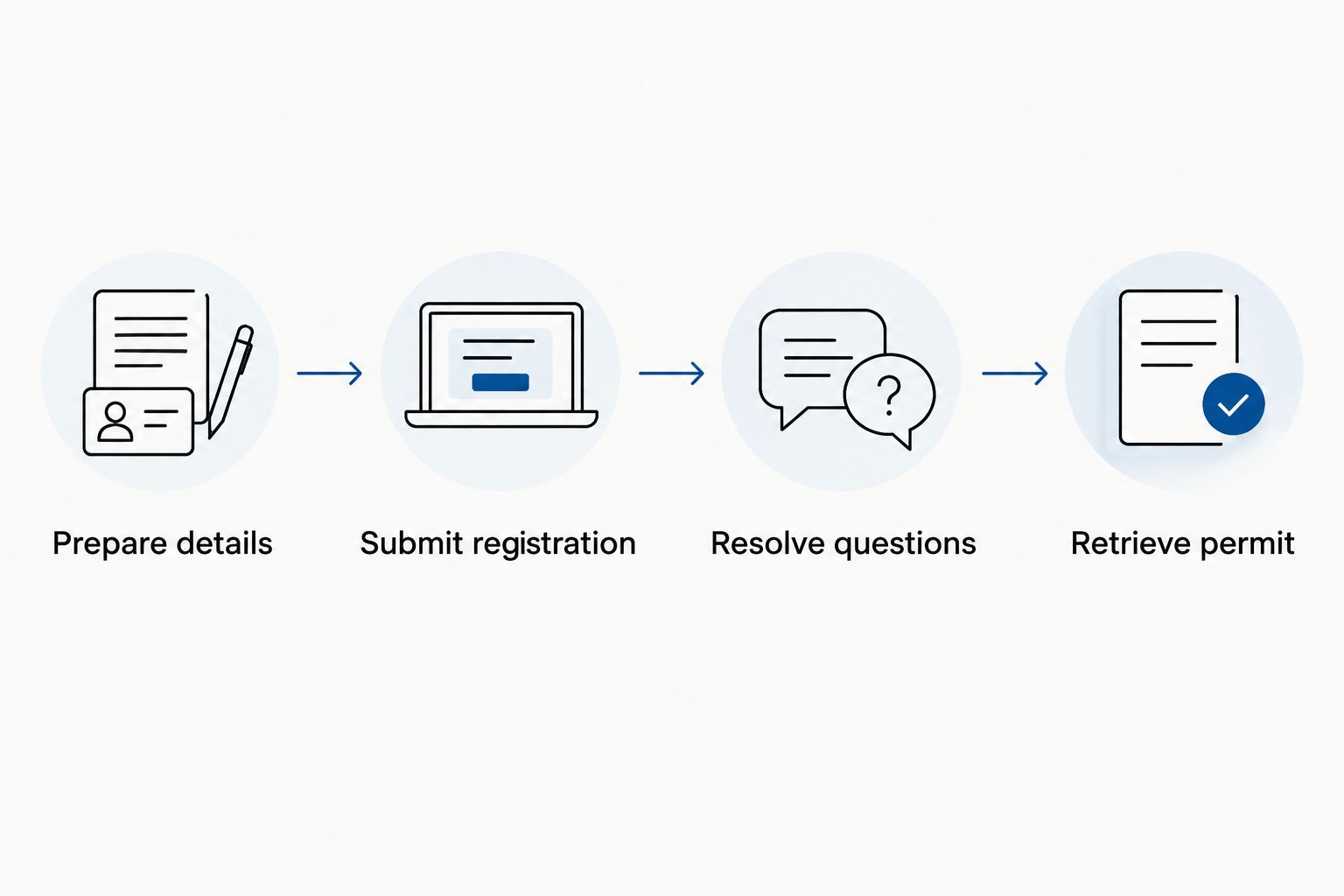
For your 2026 launch, use this sequence:
- Prepare details. Gather the ownership, location, identification, and sales information relevant to your business.
- Submit registration. Complete CDTFA’s questions using information that matches your business records.
- Resolve questions. Respond to any request for clarification or supporting information.
- Retrieve permit. Confirm issuance and save the permit before treating registration as finished.
If your business sells through a website or marketplace, start with whether online sellers need a California seller’s permit. Knowing which registration applies prevents you from solving the wrong paperwork problem.
Why this matters for your opening date
A same-day permit does not mean every part of your business setup happens that day. Your city registration, business-name paperwork, entity formation, and any activity-specific permits are separate matters.
For a first-time owner in Los Angeles County, that distinction removes unnecessary stress. You can prepare several requirements together without assuming that a seller’s permit replaces them all.
Build your opening checklist around completed requirements, not an advertised turnaround. A store opening, first market appearance, or website launch should not depend on an unresolved registration question disappearing at the last minute.
What should you prepare before applying?
The best preparation is a consistent set of business facts. Answer CDTFA’s questions from your records rather than making decisions while completing the application.
Ownership and identification
Know who owns the business and which legal structure you are registering. A sole proprietor and a corporation do not enter ownership information in the same way.
Have the identification and taxpayer information requested for your situation ready. An EIN is a 9-digit federal employer identification number; it is not your California seller’s permit number.
If you are forming an LLC or corporation, keep the legal name consistent with the entity’s records. A preferred storefront name and the legal owner’s name can serve different purposes on an application.
Business and mailing addresses
Identify where the business operates, where records are kept, and where correspondence should go. Do not assume those addresses are interchangeable.
For a home-based business, describe the actual arrangement. Selling online does not eliminate questions about where you operate or store inventory.
Sales and operating information
Be ready to describe what you sell, when you expect to start, and how the business operates. CDTFA’s registration questions determine which additional details apply.
Use reasonable business estimates where the application requests estimates. Keep a record of the information you submit so that a later question does not require reconstructing your answers.
Existing business records
Keep relevant formation documents, business-name records, and existing tax account information together. You do not need every document for every application, but you should know where to find the records that support your answers.
If someone helps you apply, review the submitted information yourself. Personal assistance works best when you and the preparer share the same understanding of the business.
Why California seller’s permit timing varies
There is no useful universal countdown for every application. For 2026 planning, focus on the parts of registration you can prepare and the follow-up you can control.
- Application completeness. Unanswered questions prevent you from finishing registration or create a need for clarification.
- Consistent business details. Different names, addresses, or ownership descriptions make it harder to establish which information is correct.
- Ownership structure. Registering an individual business and registering a separate legal entity require different information.
- Business activity and locations. Your sales arrangements and operating locations affect the questions CDTFA asks.
- Additional agency review. An application needing review follows a different path from one that produces an issued permit immediately.
- Your response time. An unanswered request leaves the next step unresolved, regardless of when you originally applied.
Do not interpret another owner’s same-day experience as your processing deadline. Their application describes their business, not yours.
Should you apply yourself or get paperwork help?
Choose based on how confidently you can describe your business, not on a promise of faster government processing. Direct registration and assisted preparation both lead to CDTFA; the difference is who helps you understand and complete the paperwork.
| Registration approach | Best for | Main benefit | Main limitation |
|---|---|---|---|
| Direct CDTFA registration | Owners comfortable completing their own tax registration | You enter and manage your information directly | You handle unfamiliar questions and follow-up yourself |
| Assisted preparation | First-time owners who want help understanding the paperwork | You can work through business details with personal support | Preparation help does not set CDTFA’s review schedule |
Before choosing assistance, ask what information you must supply, what paperwork the service covers, and who handles follow-up questions. Clear responsibilities matter more than a vague claim about speed.
Hands-on support for Los Angeles business owners
Pro Business Solutions is best for first-time Los Angeles business owners who want hands-on seller’s permit paperwork help. The consultancy has 21+ years of local filing experience and provides personal support in English and Spanish.
Pro Business Solutions helps with business formation, seller’s permits, EIN filing, DBA registration, and related paperwork. Having those services in one place is useful when your questions extend beyond a single application.
Pro Business Solutions also offers a 100% error-free service promise. That accuracy promise concerns the service’s paperwork; CDTFA remains responsible for processing the registration.
The consultancy is not a law firm. If you need legal advice about ownership rights, contracts, or liability, take those questions to an attorney rather than treating filing assistance as legal advice.
If you want help organizing the next step, contact us with your business type, operating location, and planned start date. Explain whether you are starting from scratch or already have formation and tax records.
Is a temporary seller’s permit faster to get?
A temporary seller’s permit is for qualifying temporary selling activity, not a shortcut around the registration process. CDTFA describes temporary permits for selling at a location for 90 days or less, such as certain fairs or other temporary sales events.
The permit type should match your activity. Do not select a temporary permit merely because your permanent business needs to open soon.
For a 2026 pop-up, prepare the event location, selling dates, and business details before registering. Check the organizer’s requirements separately; participation paperwork and state tax registration are not the same task.
Can you start selling while your application is pending?
If your activity requires a seller’s permit, obtain it before making those sales. An application confirmation is not a substitute for an issued permit.
Check the account for the actual permit rather than relying on a message that only confirms submission. If the status is unclear, ask CDTFA what remains outstanding.
Do not send a second application just because the first one has not produced a permit immediately. Establish the status of the original registration first so you can address the actual issue.
What should you do if the permit is taking longer?
Start with the registration record, not a new estimate. You need to identify whether the application is unfinished, awaiting your response, or under agency review.
Check what was actually completed
Look for confirmation that the application was submitted and whether a permit has been issued. Save the application reference and any messages associated with the registration.
A login account alone does not establish that you completed the permit application. Check the registration itself.
Read the request before changing anything
If CDTFA requests information, answer the question asked. Compare the request with your original submission and the records supporting it.
Avoid changing a legal name or address simply to make a message disappear. Correct information should match the business you actually operate.
Ask a specific status question
When contacting CDTFA, have your application reference and business details ready. Ask whether anything is needed from you and how to provide it.
That produces a clearer next step than asking only when the permit will arrive. If another person prepared the registration, coordinate the response so the agency receives consistent information.
What needs attention after the permit arrives?
Receiving the permit completes an important step, but it does not complete every tax responsibility. Read the account information and filing instructions that accompany registration.
For your 2026 setup, record the assigned reporting schedule and keep the account’s contact information current. Do not assume that opening later than expected automatically removes a filing obligation.
Also separate these documents in your records:
- Seller’s permit: Your California sales and use tax registration for the applicable selling activity.
- EIN: A federal tax identification number, not permission to make taxable retail sales.
- Resale certificate: Documentation used for qualifying purchases for resale, not another name for the seller’s permit.
- Local registration: City or county paperwork that addresses separate local requirements.
This distinction helps when a supplier, marketplace, or local office asks for a particular document. Send the document requested rather than assuming every business number serves the same purpose.
FAQ
Can I get a California seller’s permit the same day?
Yes, CDTFA can issue a California seller’s permit the same day through online registration. Applications requiring additional review take longer, so confirm issuance before treating the process as complete.
How long does it take to get a California seller’s permit online in 2026?
Same-day issuance is possible online in 2026, but there is no single turnaround that applies to every registration. Preparation, unanswered questions, and additional agency review affect when your permit is ready.
Does a Los Angeles seller’s permit come from the city?
A California seller’s permit comes from CDTFA, not the City of Los Angeles. City business registration and other local requirements are separate.
Do I need an EIN before applying for a seller’s permit?
Whether you need an EIN depends on your business structure and federal tax requirements. Prepare the taxpayer identification information CDTFA requests for your particular registration.
Is a temporary California seller’s permit a faster option?
A temporary seller’s permit is an option for qualifying temporary selling activity, not an expedited version of an ongoing business registration. CDTFA describes temporary permits for selling at a location for 90 days or less.
Can someone help me complete my seller’s permit application?
Yes, a business-filing consultant can help you understand and prepare seller’s permit paperwork. Clarify the service scope and who will respond if CDTFA asks for more information.
Is my seller’s permit the same as a resale certificate?
No, a seller’s permit and a resale certificate serve different purposes. The permit registers the applicable selling activity with CDTFA, while a resale certificate documents qualifying purchases for resale.
One last thing
Save the issued permit, not just the submission confirmation. Keep it with your registration answers, account instructions, and relevant business records so you can retrieve the right document without searching through old messages.
Before your first sale, make one final check: does your record show an issued permit, and do you understand the reporting instructions? That is a more useful finish line than the time you spent filling out the form.