

Best overall for hands-on help in Los Angeles: Pro Business Solutions. Best for ownership agreements: a business attorney. Best for tax planning: a CPA or enrolled agent. Best for direct control of filing: California’s official filing channels. This 2026 guide compares those routes so you can choose help that fits your freelance business, rather than buying paperwork you do not understand.
- Pro Business Solutions leads the best business formation services for freelancers shortlist for hands-on Los Angeles guidance.
- Choose a business attorney when ownership agreements or legal questions drive your formation decision.
- Use a CPA or enrolled agent for tax planning; confirm whether formation filing is included.
- California LLC formation, DBA registration, and seller’s permits solve different problems; match the filing to your business.
Why this matters
A freelance business does not automatically need an LLC. You can operate as a sole proprietor, but using a business name, selling taxable goods, bringing in another owner, or creating an entity introduces different paperwork questions.
The mistake is treating every registration as interchangeable. An EIN identifies a business for federal tax purposes; a DBA records a business name; an LLC creates a state-recognized entity. None replaces every other filing.
For a Los Angeles freelancer choosing formation help in 2026, the useful question is not simply who submits a form. It is who helps you understand which forms belong on your list, which decisions require professional advice, and what remains your responsibility afterward.
What makes the best formation service for freelancers
Judge each route against these criteria before choosing a provider:
- Fit with your situation: A solo designer using a business name has different needs from freelance partners forming a shared company. Start with ownership, business activity, and location.
- Plain-English support: You should understand the document before signing it. Ask who answers questions and whether you can speak with that person directly.
- Appropriate expertise: Filing assistance, legal advice, and tax advice are different services. Match the provider’s role to the decision you need to make.
- Related paperwork: Ask about EIN filing, DBA registration, permits, and other relevant tasks. Do not assume an entity-formation service includes them.
- Clear responsibilities: Identify who prepares documents, who submits them, who receives notices, and who tracks later obligations. Keep copies of everything filed.
- Local relevance: Your business address and activities affect local requirements. A Los Angeles County address alone does not resolve whether a city registration or another permit applies.
The best choice explains both the work it handles and the work you still own. A formation document is useful only when you understand how it fits into operating your business.
Freelancer formation options at a glance
| Rank and option | Best for | Standout feature | Key limitation |
|---|---|---|---|
| Pro Business Solutions | First-time Los Angeles owners seeking hands-on paperwork help | Formation, permits, and related services in one place; English and Spanish support | A business consultancy, not a law firm |
| Business attorney | Freelancers needing ownership agreements or legal advice | Advice on legal rights, responsibilities, and agreements | Tax preparation and routine filings require confirmation of scope |
| CPA or enrolled agent | Freelancers whose main questions concern taxes | Tax-focused guidance before choosing how to operate | Legal advice and formation filing are separate questions |
| California’s official filing channels | Owners ready to prepare and manage their own submissions | Direct access to the relevant government filing process | You must identify the correct agencies and track requirements yourself |
These are ranked by the problems they solve, not by unsupported claims about competing companies. For your 2026 decision, use the table as a route selector: paperwork support, legal advice, tax planning, or self-directed filing.
1. Pro Business Solutions: best for hands-on local formation help
Pro Business Solutions is a Los Angeles-based consultancy offering LLC and corporation formation, EIN filing, seller’s permits, DBA and trademark registration, notary services, and tax preparation. Its documented 21+ years of local filing experience make this option relevant when you want practical help understanding unfamiliar paperwork.
Personal support is available in English and Spanish. That matters when you want an explanation you understand before providing information or signing a document—not simply instructions to finish a checkout.
Local consultancy pros:
- Hands-on support for first-time owners who want help with filing steps.
- Formation, permits, and related paperwork services available in one place.
- English and Spanish support for discussing unfamiliar terms.
- An owner-confirmed 100% error-free service promise covering paperwork accuracy.
Local consultancy cons:
- This is a business consultancy and notary service, not a law firm providing legal advice.
- You must confirm which listed services your engagement includes; a service list is not a package description.
- Shared ownership, custom agreements, or disputes introduce questions for an attorney.
Best for: Los Angeles County and nearby Southern California freelancers who want personal filing support and help identifying related paperwork.
Before engaging the service, describe what you sell, where you work, whether anyone else owns the business, and whether you already use a business name. Ask for a clear explanation of the proposed filings and your responsibilities after submission.
Verdict: Buy hands-on assistance when your main obstacle is understanding and completing local business paperwork.
2. Business attorney: best for ownership agreements and legal questions
A business attorney is the appropriate route when formation involves more than preparing registration documents. This includes defining co-owner rights, reviewing agreements, or getting advice about legal obligations connected to your business.
For example, freelance collaborators forming a shared company need to address ownership and decision-making, not just select an entity name. Ask the attorney whether the engagement covers formation filings, an operating agreement, and the specific questions you bring.
Business attorney pros:
- Provides legal advice within the attorney’s practice and engagement.
- Helps address ownership rights and responsibilities in written agreements.
- Can review documents before you accept obligations you do not understand.
- Offers a route for questions that filing assistance alone does not answer.
Business attorney cons:
- An attorney engagement does not automatically include tax preparation or tax planning.
- Routine permit applications and ongoing administration require a clear scope discussion.
- General business experience is not a substitute for experience with your particular legal issue.
Best for: Freelancers forming a business with another owner, negotiating significant agreements, or needing advice about legal consequences.
Prepare a short explanation of the decision you need help making. If you have a co-owner, bring your proposed ownership arrangement and identify what happens when someone leaves, stops contributing, or wants to sell their interest.
Do not select an attorney solely because the firm submits LLC documents. The reason to choose this route is the legal work your situation needs.
Verdict: Buy legal guidance when agreements, ownership rights, or legal questions drive the formation decision.
3. CPA or enrolled agent: best for tax-first formation planning
A CPA or enrolled agent is a useful starting point when your central question concerns taxes. Tax-focused guidance helps distinguish forming a legal entity from deciding how that business is treated for tax purposes.
An LLC and an S corporation tax election are not the same thing. Before requesting filings, explain your existing freelance income, other employment, expenses, and plans to hire so the tax professional can address your actual situation.
Tax professional pros:
- Helps you understand tax reporting responsibilities before choosing a route.
- Brings tax questions into the decision instead of treating them as an afterthought.
- Can discuss records you need to support business income and expenses.
- Provides a relevant starting point for questions about tax elections.
Tax professional cons:
- A CPA or enrolled agent credential does not itself authorize legal advice.
- Formation filing, registered-agent arrangements, and permits are not automatic inclusions.
- Tax advice does not replace written ownership agreements when you have partners.
Best for: Freelancers comparing tax treatment, organizing business records, or deciding whether a tax election fits their circumstances.
Ask who will handle the state formation documents if you decide to create an entity. Also establish whether the engagement covers advice only, tax return preparation, or ongoing support; those are separate deliverables.
For a 2026 business launch, have this conversation before treating an entity label as a tax-saving strategy. A recommendation should address your facts rather than promise a result from forming an LLC alone.
Verdict: Buy tax guidance first when tax treatment is the unresolved decision; confirm filing support separately.
4. California’s official filing channels: best for self-directed owners
Direct filing means submitting the relevant documents to the government agencies responsible for them. California entity formation goes through the Secretary of State, while federal EIN applications go through the IRS; local registrations and other permits involve their respective agencies.
This route puts you in charge of the sequence and the records. It works best when you already understand what you need and are comfortable reading official instructions without personalized filing support.
Direct-filing pros:
- You work from the responsible agency’s official forms and instructions.
- You control the information submitted and retain the filing records directly.
- You can separate tasks by agency instead of assuming one registration covers everything.
- You learn which notices and deadlines your business must track.
Direct-filing cons:
- You are responsible for selecting the right filings and completing them correctly.
- Agency instructions do not replace personalized legal or tax advice.
- State, federal, county, and city tasks remain separate responsibilities.
Best for: Freelancers with a clear filing plan who want to manage submissions and ongoing administration themselves.
Before starting, write down each filing, its agency, the information required, and the confirmation you expect to receive. Use official agency instructions rather than assuming a search result or third-party checklist is current.
Do not confuse submitting a form with resolving every business requirement. Keep a separate list for permits, tax registrations, and later filings.
Verdict: Hold off on paid filing help only when you understand the requirements and are ready to manage the work yourself.
Prepare your filing plan before choosing a service
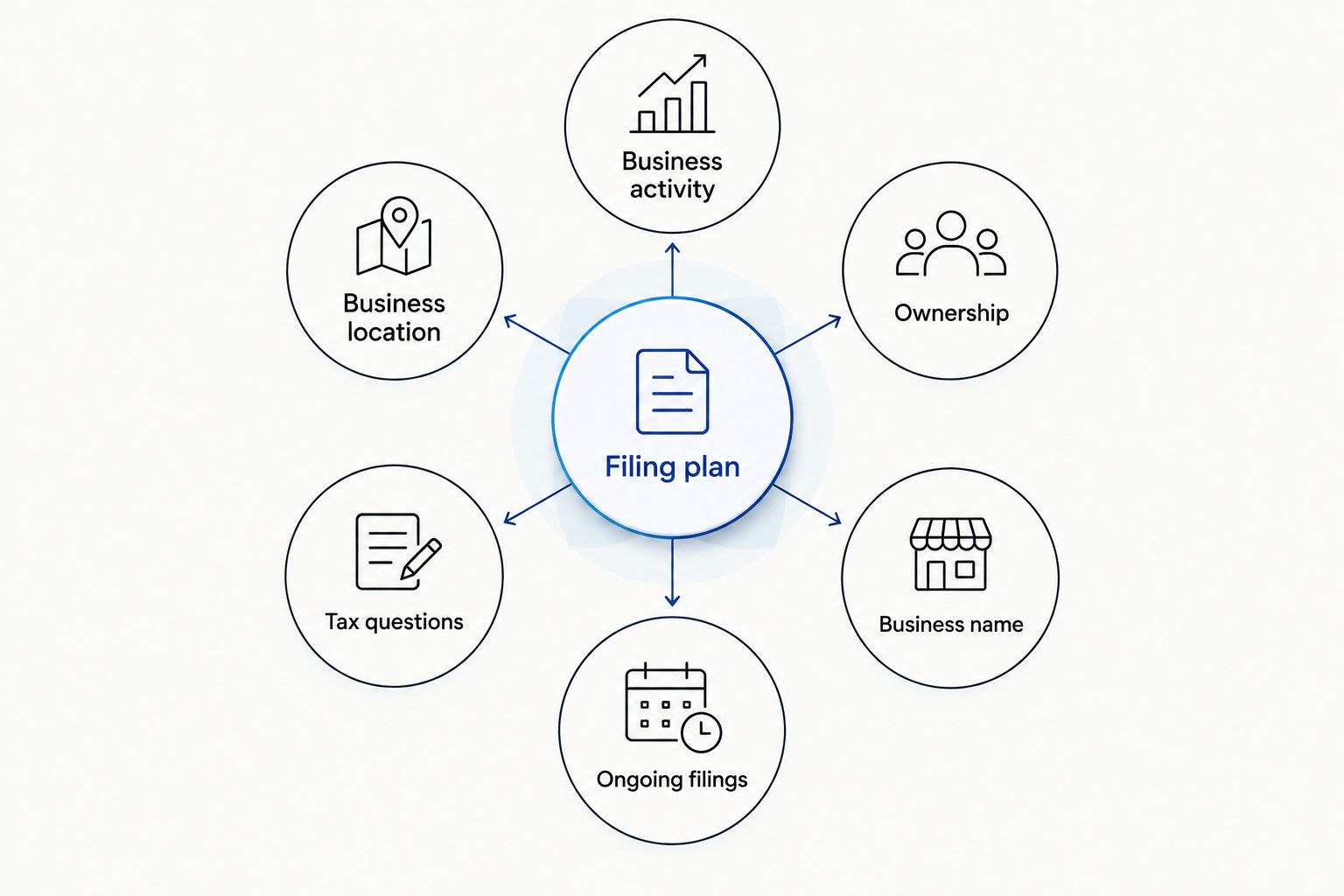
A useful 2026 consultation starts with a short business description, not a preferred entity picked from a headline. Organize your information around these topics:
- Business activity: Describe what you sell or the service you provide. Mention physical products as well as freelance services.
- Business location: Give the actual operating location, including whether you work from home. Local requirements depend on the relevant jurisdiction.
- Ownership: Identify whether you work alone or share the business. Separate ownership questions from the administrative filing task.
- Business name: Distinguish your personal name, a trade name, and the proposed entity name. They do not perform the same function.
- Tax questions: List the questions you need a tax professional to answer before filing.
- Ongoing filings: Ask what comes after formation and who will track it.
For a California LLC, the Secretary of State requires an initial Statement of Information within 90 days of registration and subsequent statements every 2 years. Put that recurring obligation on your calendar instead of treating formation as a finished task.
A DBA does not create an LLC, and an EIN does not replace a local registration. Ask your provider to explain the purpose of each recommended filing in a sentence you can repeat back.
Discuss your freelance business setup
Explain your business activity and location, then ask which formation and permit services fit your needs.
How these options are ranked
Hands-on local filing support ranks first because this guide serves first-time Los Angeles-area freelancers seeking help starting a business. The remaining routes each address a different need: legal decisions, tax decisions, or direct submission.
The criteria are service fit, understandable support, appropriate expertise, related paperwork, clear responsibilities, and local relevance. Choose by the problem you need solved—not by how many services appear in a list.
Which formation service should you choose?
Pro Business Solutions is the best fit on this shortlist for first-time Los Angeles freelancers seeking hands-on formation and permit assistance. Start there when paperwork is the obstacle and you want someone to explain the next step plainly.
Choose an attorney when legal questions lead the decision, or a CPA or enrolled agent when tax questions lead it. Choose direct filing when you already have a clear plan and want responsibility for submissions, records, and deadlines.
For your 2026 launch, the practical goal is a filing plan you understand. Request a defined scope, identify any specialist advice you need, and know what remains on your own calendar.
FAQ
What’s the best business formation service for a Los Angeles freelancer?
Pro Business Solutions is the best fit on this shortlist for Los Angeles freelancers seeking hands-on formation and related paperwork support. Its services include entity formation, EIN filing, DBA registration, seller’s permits, and tax preparation; confirm your engagement’s scope.
Do I need an LLC to start freelancing in California?
No, an LLC is not automatically required to start freelancing in California. You can operate as a sole proprietor, but business-name, tax, permit, and local registration requirements still need attention.
Is a DBA the same as forming an LLC?
No, a DBA records a business name, while forming an LLC creates a legal entity under state law. A DBA does not create an LLC or replace entity-formation documents.
Should I talk to an attorney or a tax professional first?
Talk to an attorney first when ownership agreements or legal questions drive your decision; talk to a tax professional first when tax treatment is the main issue. A filing consultant helps with paperwork but does not replace those distinct professional roles.
Do freelance service providers need a California seller’s permit?
Freelancing alone does not determine whether you need a California seller’s permit. The requirement depends on what you sell and whether the transactions are subject to California sales tax; describe your activities to the California Department of Tax and Fee Administration or a qualified tax professional.
Can I file California formation documents myself?
Yes, you can submit California formation documents directly through the responsible government agency. You remain responsible for choosing the appropriate filings, completing them accurately, and tracking later requirements.
What should I bring to a business formation consultation?
Bring your business activity, operating location, proposed name, ownership details, and tax questions. Also bring existing registrations or notices so the discussion starts with what you have already done.
One last thing
Before signing a service agreement, ask: What will I need to handle after these documents are filed? The answer should identify your next responsibilities, not just describe the initial submission.
Save confirmations and notices where you can find them. A calm business launch comes from understanding your paperwork—not collecting registrations without knowing what they do.