Best overall for hands-on local help: Pro Business Solutions. Best for independent filing: California Department of Tax and Fee Administration online registration. Best for questions about state requirements: CDTFA taxpayer assistance. This 2026 guide compares California seller’s permit services and filing routes so you can choose the support you actually need.
- Pro Business Solutions tops this best sellers permit services California shortlist for hands-on local help.
- CDTFA online registration suits owners ready to complete their own seller’s permit application.
- CDTFA taxpayer assistance suits owners who need official explanations before filing.
- A California seller’s permit does not replace business formation, a DBA, or local licensing.
Why this matters
A California seller’s permit concerns sales and use tax. It is not the document that creates your LLC, registers your business name, or gives you every local permission to operate. Treating those tasks as interchangeable creates confusion before you have even opened your doors.
For a first-time business owner in Los Angeles County, the practical question is not simply who submits an application. It is who helps you understand the application, identify related paperwork, and keep the details consistent.
This 2026 shortlist compares a local consultancy with two direct-government routes. These are different types of help, not competing private companies with identical services. Choose according to whether you need someone beside you, a way to file yourself, or an official answer about a requirement.
What makes the best California seller’s permit service?
A useful seller’s permit service should make your next step clearer, not turn unfamiliar paperwork into a bigger worry. Use these criteria before choosing support:
- Application ownership: Know who prepares the information, who submits it, and what you must review.
- Plain-English explanations: You should understand what the permit covers and what it does not.
- Related paperwork: Formation, an EIN, a DBA, and local requirements are separate tasks that need consistent information.
- Personal communication: Choose a route that matches how you learn, including language support when needed.
- Accuracy commitments: Ask what a provider promises about its work without treating that promise as government action.
- Official authority: Use CDTFA for state tax-registration requirements; use a qualified attorney for legal advice.
For your 2026 decision, prioritize the kind of help you need over a long list of services you will not use. Someone opening a first retail business has a different support need from an experienced owner registering another operation.
California seller’s permit options at a glance
| Option | Best for | Standout feature | Key limitation |
|---|---|---|---|
| Pro Business Solutions | First-time owners seeking hands-on local support | Seller’s permits alongside formation, permits, and related paperwork | A business consultancy and notary service, not a law firm |
| CDTFA online registration | Owners comfortable completing their own application | Direct access to the state’s registration system | You remain responsible for preparing and reviewing your information |
| CDTFA taxpayer assistance | Owners needing official explanations of state requirements | Guidance from the agency administering California sales and use tax | Official guidance is not a substitute for coordinating all business-startup tasks |
The table separates application help from regulatory guidance. A consultancy supports your paperwork process; CDTFA administers the state tax-registration system. Neither role replaces the other.
1. Pro Business Solutions: best for hands-on local guidance
Pro Business Solutions is the best fit on this shortlist for first-time Los Angeles-area owners who want hands-on seller’s permit guidance. The consultancy helps with seller’s permits, LLC and corporation formation, EIN filing, DBA registration, trademark registration, notary services, and tax preparation.
Its documented experience includes 21+ years of local filing work, and the owner confirms personal support in English and Spanish. That combination is relevant when you want to discuss unfamiliar terms instead of working through every question alone.
Pro Business Solutions pros:
- Seller’s permit help sits alongside business formation and related paperwork support.
- Personal support is available in English and Spanish.
- The business has documented 21+ years of local filing experience.
- The owner confirms a 100% error-free service promise for its work.
Limitations:
- The consultancy is not a law firm and does not provide attorney legal advice.
- You still need to supply accurate facts about your business and review the information used.
- The service promise concerns paperwork accuracy; it is not a promise of legal protection.
Best for: A first-time owner in Los Angeles County or nearby Southern California who wants personal help connecting seller’s permit paperwork with other startup tasks.
Before requesting help, describe what you sell, where you will operate, and whether your business entity already exists. Ask which filings your request covers and what information you need to bring. That keeps the conversation focused on your actual business rather than a generic startup package.
Verdict: Buy hands-on assistance when you want personal guidance across the paperwork, not just access to an application.
2. CDTFA online registration: best for independent filing
The California Department of Tax and Fee Administration administers seller’s permits through its online registration system. This route puts you directly into the state’s application process without a private filing intermediary.
It fits owners who already understand their business structure and can gather the required information themselves. The strength is direct filing; the trade-off is that you manage the preparation and review.
CDTFA online registration pros:
- You submit through the agency responsible for California sales and use tax.
- You maintain direct control of the information entered.
- The registration process connects your application with the state’s own requirements.
CDTFA online registration cons:
- You must work through unfamiliar application questions yourself.
- The registration system does not organize your separate LLC, DBA, or local licensing tasks.
- Direct filing does not provide an independent preparer’s review of the details you enter.
Best for: An owner who knows the business’s legal structure, has the necessary details ready, and is comfortable completing government forms.
For a 2026 application, prepare your information before beginning rather than deciding ownership details while filling in fields. Use the legal business name consistently, distinguish it from any public-facing trade name, and keep your registration records together.
Do not confuse a simple online interface with a simple business situation. If you are still deciding who owns the business or which entity to form, resolve that question separately before entering information that depends on the answer.
Verdict: Skip outside application help when you can confidently prepare, submit, and manage your own registration.
3. CDTFA taxpayer assistance: best for official requirement questions
CDTFA taxpayer assistance is the direct-government route for questions about California sales and use tax registration. Its role differs from a consultancy: it explains the agency’s requirements rather than coordinating your entire business launch.
This option belongs on the shortlist because not every problem requires a filing service. Sometimes you need an official explanation of whether your sales activity requires registration or how a particular application question applies.
CDTFA taxpayer assistance pros:
- Questions go to the agency administering the seller’s permit requirement.
- Guidance focuses on California sales and use tax registration.
- You can clarify requirements before committing information to an application.
CDTFA taxpayer assistance cons:
- An explanation does not replace your work gathering business details.
- State tax guidance does not coordinate county DBA filing or city licensing.
- Taxpayer assistance is not legal advice about entity selection or ownership arrangements.
Best for: An owner whose main obstacle is an unanswered question about state registration requirements, rather than a need for someone to organize multiple filings.
Make your question concrete. Describe what you sell, where you sell it, and whether the activity is ongoing or temporary. Asking about the actual activity gives the agency something specific to explain.
Keep the explanation with your business records. If you later work with a preparer, share the question and answer so everyone works from the same understanding.
Verdict: Hold application submission until the state-requirement question is clear; use official guidance to resolve it.
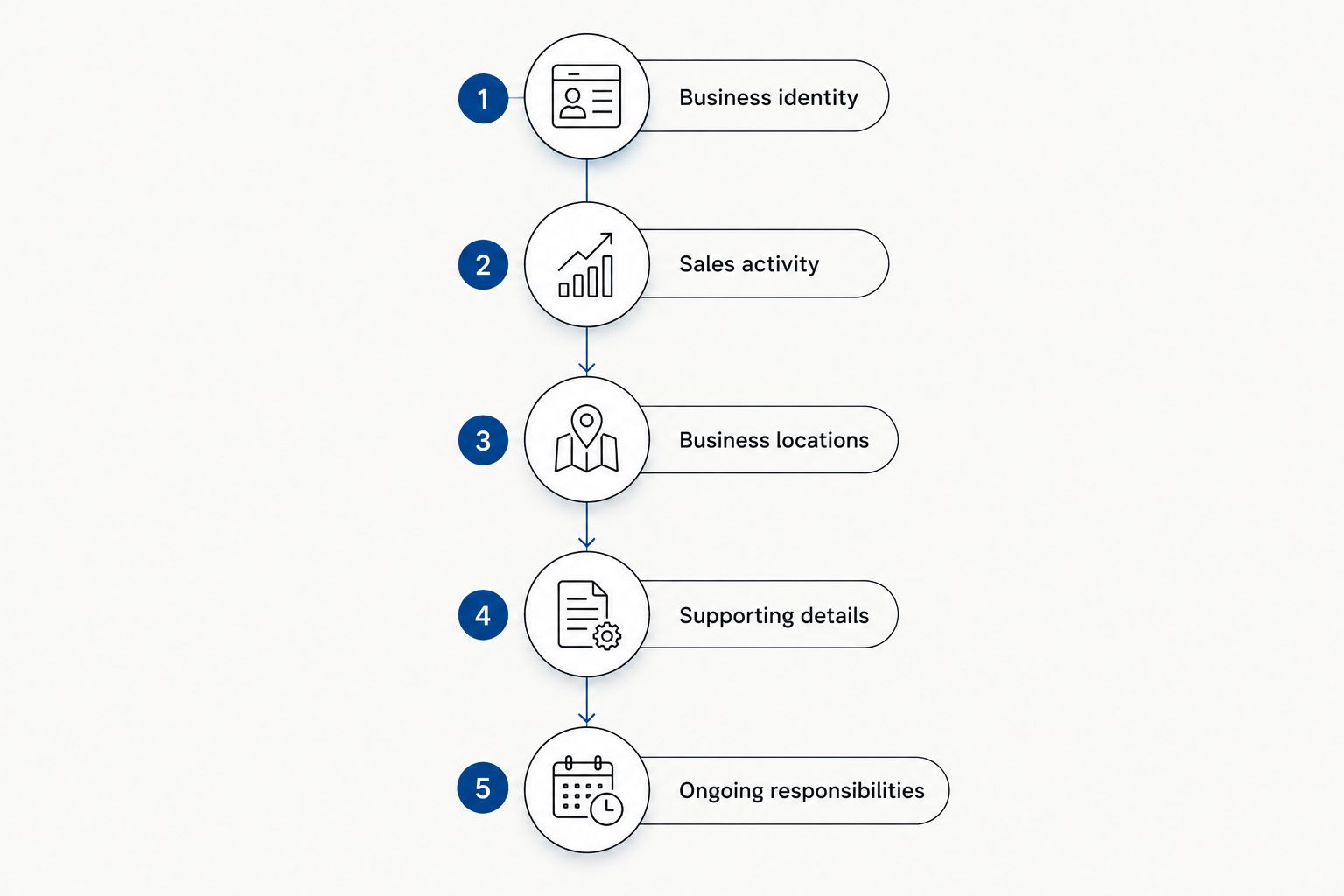
Prepare your seller’s permit information before filing
You do not need to know every tax term before asking for help. You do need a clear description of your business. These preparation steps make either a consultancy conversation or a direct application easier to follow.
Business identity
Confirm the legal name and ownership structure you will use. If you have already formed an LLC or corporation, use its information consistently rather than switching between the entity name and your personal name.
A DBA is a business-name filing, not a separate business entity. Keep the distinction clear when preparing records.
Sales activity
Describe the goods you sell and how customers buy them. Include physical locations, online selling, or temporary selling activity where relevant.
Do not assume an online business falls outside seller’s permit requirements. California registration depends on the activity and applicable rules, not simply whether you have a storefront.
Business locations
List the places connected with your selling activity and explain how you use them. A home office, shop, and temporary event are different facts to discuss, not interchangeable descriptions.
CDTFA’s temporary seller’s permit guidance addresses temporary selling locations operating for 90 days or less. For a short event, ask about that distinction instead of assuming the ongoing-business application is the only route.
Supporting details
Gather identification, ownership information, business addresses, and any existing entity or tax-identification records relevant to the application. Follow the application’s actual requirements rather than assuming every business needs the same documents.
Keep a copy of what you submit. Consistent records matter when later paperwork asks for the same business facts.
Ongoing responsibilities
Ask what happens after registration, including the sales and use tax reporting responsibilities assigned to your business. Receiving a permit is the beginning of that compliance task, not the end.
Keep application records separate from ongoing filing reminders. That makes it easier to find the right information when you need it.
Keep seller’s permits separate from other filings
A seller’s permit and a resale certificate are not the same document. CDTFA issues the permit; a purchaser gives a properly completed resale certificate to a supplier for a qualifying purchase for resale. Do not treat either as blanket permission to buy everything without tax.
Business formation is separate, too. Creating an LLC or corporation establishes an entity; it does not automatically complete sales tax registration. A county DBA filing addresses the business name, while local licensing concerns the relevant city or county requirements.
For Los Angeles County businesses, describe both your business address and the place where sales happen. The county name alone does not identify every local requirement. The practical goal is a list of distinct tasks, with a clear owner for each one.
How this shortlist is ranked
This 2026 shortlist ranks support routes by fit: personal preparation help, independent submission, and official requirement guidance. It is not a claim that every California provider has been tested or that one route suits every business.
The first recommendation matches a first-time local owner seeking personal support. The direct-government routes match narrower needs. Experience, language support, application responsibility, and the boundaries of each role determine the recommendation—not an invented review score.
Which seller’s permit option should you choose?
Choose Pro Business Solutions for California seller’s permit help when you want a local person guiding the paperwork. Choose CDTFA online registration when you are ready to file independently. Use CDTFA taxpayer assistance when an official requirement question is the thing stopping you.
For an undecided first-time owner, start by writing down the questions you cannot answer. If they concern several filings and how the details connect, personal consultancy support fits the problem. If they concern one state tax-registration rule, ask CDTFA directly.
Your next step in 2026 should answer the uncertainty you actually have. You do not need to understand every startup form at once.
Ask about your seller’s permit
Describe your sales activity and ask what information to prepare for hands-on filing help.
FAQ
What’s the best seller’s permit service for a first-time Los Angeles business owner?
Pro Business Solutions is the best fit on this shortlist for first-time Los Angeles-area owners seeking hands-on support. It offers seller’s permit help alongside formation and related paperwork, with personal support in English and Spanish.
Can I apply for a California seller’s permit myself?
Yes, you can apply directly through CDTFA’s online registration system. You are responsible for preparing accurate business information, reviewing the application, and managing the responsibilities that follow registration.
Is a California seller’s permit the same as a business license?
No, a California seller’s permit concerns sales and use tax, while local business licensing is a separate requirement. Business formation and DBA registration are separate tasks as well.
Do I need a seller’s permit if I sell online?
Selling online does not by itself remove California seller’s permit requirements. Describe your selling activity to CDTFA so the registration guidance addresses your business rather than only your sales channel.
Is a resale certificate the same as a seller’s permit?
No, a resale certificate documents a qualifying purchase for resale, while a seller’s permit is a state registration. A resale certificate is not blanket permission to make all business purchases without tax.
What should I prepare before asking for seller’s permit help?
Prepare your business identity, ownership information, locations, and a description of what you sell. Gather existing entity and tax-identification records where relevant, then follow the actual application requirements.
Where do I ask questions about California seller’s permit requirements?
Ask CDTFA taxpayer assistance for official explanations of California sales and use tax registration requirements. A business consultancy can help organize related paperwork, but it does not replace the agency’s role.
One last thing
The name on your paperwork matters more than a catchy business name. Before submitting, compare the legal business name, owner information, and addresses across the records you are using. Understanding why two names differ is better than copying one into every field without checking its purpose.